
The problem isn’t that SMEs hate technology. It’s that technology still expects them to become operators.
What Barr Garage Auto Spray taught us about receipts, mamak POS, and why ResitJe is a Telegram chat, not another dashboard.
ButterflyCopilot
We recently sat with a workshop owner.
Barr Garage Auto Spray. The business is the spray work. The headache is not.

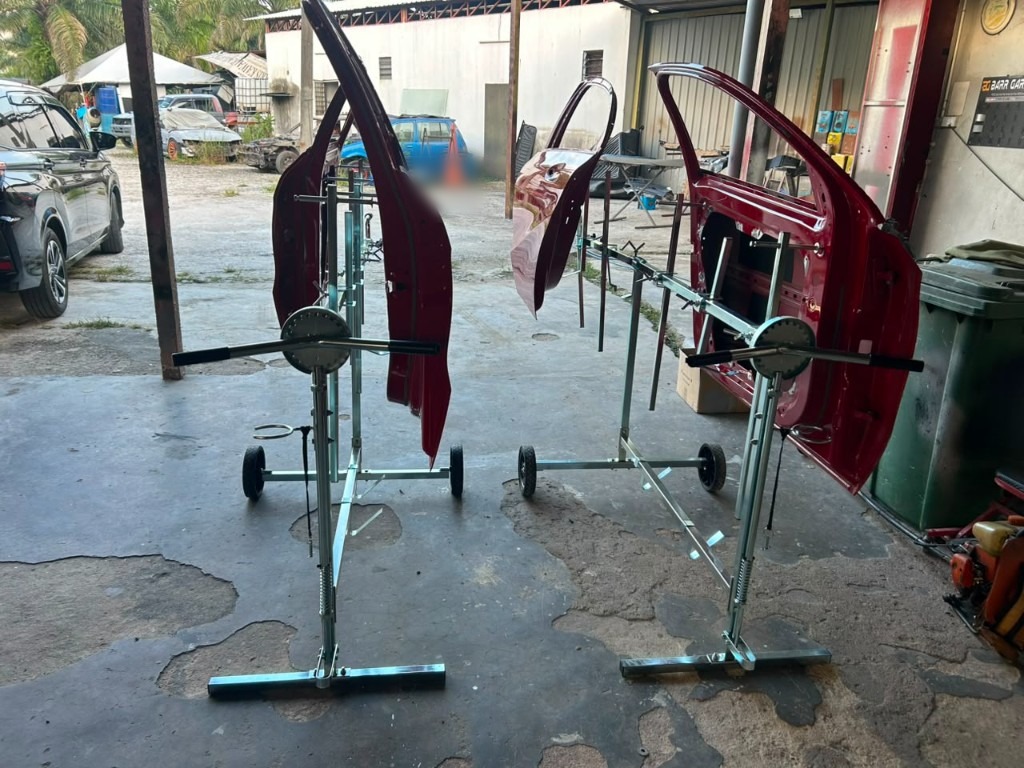
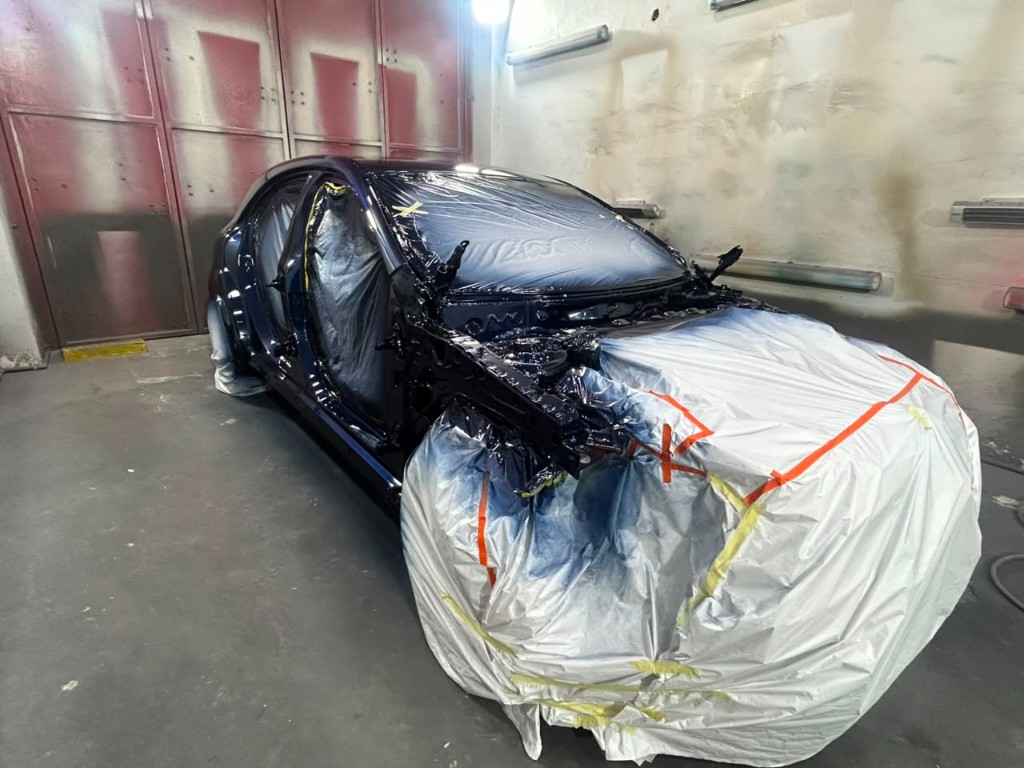
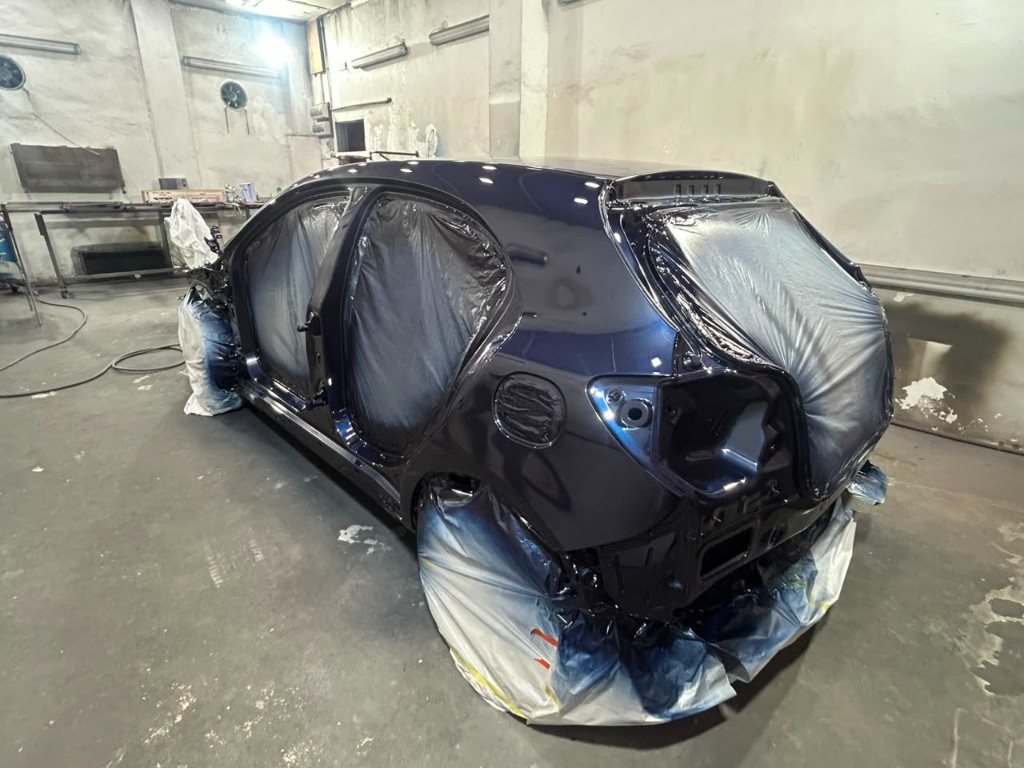
The headache is operations.
One of the smallest, most repeating jobs in the shop: making a receipt.
He already has a way. Excel. Old school. He is not anti technology. He opens the file, he types, he prints. It just never became easy. Every receipt is a small tax on someone who did not become a business owner to become an Excel person.
That receipt file is also a symptom of a bigger shape: fragmented, manual work. Excel for slips. WhatsApp for customers. Memory for what sold today. Nothing talks to anything else. The shop runs. It just does not compound.
The usual product instinct is: give him a nicer app. Cleaner dashboard. Bigger buttons. Onboarding. A YouTube tutorial. “It’s simple, boss, just click here.” Or worse: drop a full system on day one and call it transformation.
We have seen that instinct fail.
Not only at Barr Garage. Earlier, with mamak restaurants too.
They are not refusing software. They are refusing a new pattern.
Mamak staff are often not hired as tech users. They are hired to move plates, take orders, and not mess up the till.
If they were trained on a POS at all, they were not trained on a system. They were trained on a pattern.
Click the red one. Then the green one. Then this. Then that. Same sequence, every order, until the hands remember it and the brain does not have to.
That is the real UX of a lot of Malaysian SMEs. Not Figma. Muscle memory.
So when you walk in with a “better” POS, even one with a simpler UI, you are not offering a feature. You are offering retraining.
Retraining low skill, high pressure staff. During lunch rush. With a queue. With a boss who does not want to stand behind the counter teaching software.
Change the screen, you change the pattern. Change the pattern, you get wrong orders, wrong totals, stuck screens. Then the owner has to come out and fix it. That is extra work he did not ask for. Many owners will not take that deal. People call it lazy. In a small shop it is closer to survival: do not add a second job called “IT support for my own staff.”
Barr Garage is the same shape of problem, different shop. The owner is not struggling because receipts are intellectually hard. He is struggling because every “simple” tool still asks him to become a different kind of operator: menus, files, templates, columns, export, print.
You can simplify the UI a lot. You still lose people who need training to use a product that was supposed to save them time.
That is the lesson we keep walking into: simplified is not the same as already known.
Which is why a connected operating system cannot arrive as one new screen the whole shop has to learn. If you lead with the full OS, you get the mamak reaction: too much new pattern, reward still unclear, owner will not retrain the floor.
You start at one painful fragment. You connect it. You let them feel the win. Then the next piece has somewhere to land.
The interface they already passed
There is one interface almost everyone in this country already knows how to use.
Messaging.
They learned it on SMS. Then WhatsApp. Then they watched ChatGPT blow up, not because the model was the first thing they understood, but because the box looked like a chat they had been using for fifteen years. Type. Send. Reply. No toolbar. No module. No training day.
ChatGPT did one more thing that most products still refuse to do. They took away the login button. You can chat first. No account. No email. No password. The product starts at the reward, not at the paperwork.
I bet if they had made it login first, then chat, a large share of users would never have shown up. Not because login is “hard” for a developer. Because for someone who is not tech savvy, every extra action is expensive brain energy, and they cannot see the reward yet.
That is the real equation.
Action without a felt reward feels like a waste. Create account. Verify email. Pick a plan. Watch a tutorial. For a workshop owner who already doubts software, that is a lot of thinking for a prize he has not tasted.
Use it first. Feel the receipt come out. Feel the answer come back. Then the same action is justified. The brain energy now has a reason.
Most SME tools invert this. They ask for commitment before proof. ChatGPT did the opposite, and that is a big part of why it spread to people who would never sit through onboarding.
ResitJe is one deployment we made while helping an SME move from that fragmented, manual stack toward a connected operating system.
Not the whole OS in one shot. One connected piece: receipts stop living as a lonely Excel ritual and start living in a thread he already knows how to use. Same template. Items in chat. File in his hand. A record that can actually connect to the rest of the shop later.
Do not make Barr Garage learn another software. Do not make a mamak retrain the whole floor on a new colour map. Put the first connection inside the thing they already open every day: a message thread. Let them get a receipt in their hands before you ask them to become a “user” of an operating system.
The flow is the same one we told Barr Garage:
- Pick a receipt template (his layout, not a generic invoice)
- Type the items and prices, like he would text a friend
- The bot generates the receipt
- He gets PDF / PNG
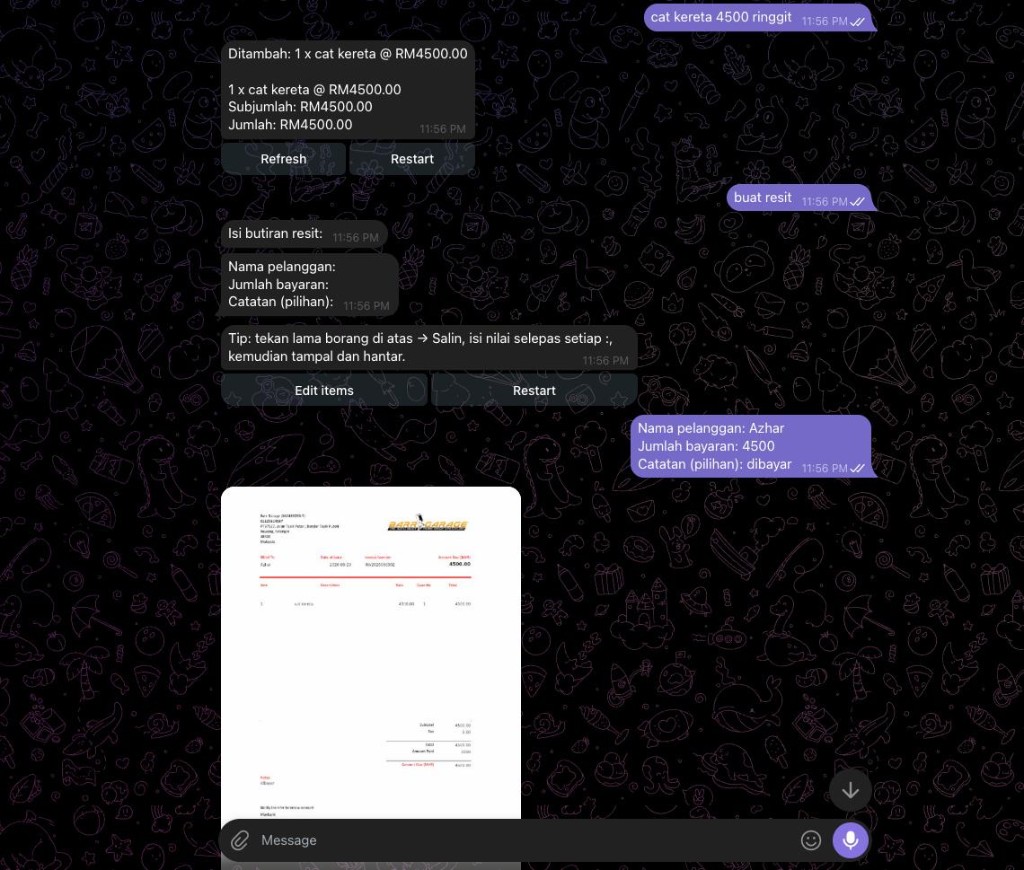
No new login maze. No Excel file to babysit. Just chat, the way he already chats.
The point is not “AI receipts.” The point is remove the UI/UX barrier so the first link in a connected system does not require a training day. If the hardest part of software is teaching people the software, then the product should not look like software. It should look like a conversation they already know how to finish. And it should give them the win before it asks them to work for it.
What we actually learned
Helping Barr Garage did not teach us that SMEs need more features.
It taught us this:
A lot of owners will use technology. They already use WhatsApp all day. They already use Excel badly. They already use a POS they hate, because the staff know which colour to press.
What they will not do is retrain the shop so your product can feel modern. And they will not spend scarce attention on a login wall, or a full operating system, when they still do not know what they get in return.
So the job is not “get them to adapt to technology.”
The job is to make technology adapt to how the shop already moves. Start at the fragment that hurts. Use the interface they already passed. Let them feel the reward. Then connect the next workflow.
That is ResitJe: one deployment on the way from manual, disconnected work to a connected operating system. Receipts, in Telegram, in the language they already type.
The clock on that same shop is how we removed a 2–3 day invoicing pile. Same workshop. Same agent. The process, not the thesis.
If you want to try it, message us on WhatsApp and we will drop you into the ResitJe bot.